Showing posts with label Experimental sound. Show all posts

Friday, 11 April 2014

Sound Induction

Future Sessions!

Session 1 (31st Jan): Introduction to Experimental Sound!
!
Session 2 (7th February): Location Recording!
!
Session 3 (14th February): Studio Recording & Foley!
 - Room G23. - 5 Groups!
!
Session 4 (21st February): Tracklaying in Adobe Audition!
!
Session 5 (28th February): Editing in Adobe Audition!
!
Session 6 (7th March): Mixing in Adobe Audition!
!
Session 7 (14th March): Working Session!


quote below i had to put mention as Walter Murch is one my favorites editors.
‘Humble sounds had always been considered the 
inevitable accompaniment of the visual — stuck like 
an insubstantial, submissive shadow to the object 
that "caused" them’.

Walter Murch, 2000


Technical Standards!
•  24 Bit Resolution 
•  48 kHz Sample Rate 
•  Mixed to -10 dbfs 
•  Recorded as .WAV or .BWF (PCM) 
•  Submitted as a Quicktime (.mov) file !- format in which we had to export it to. told in our first sound lesson.

Further Reading /Related Sounds

these are links to articles to artists we have looked at in our classes as one article in particular the Walter Murch article has given me a more understanding to how sounds work within films.


http://filmsound.org/murch/stretching.htm

http://www.creativetourist.com/articles/art/sheffield/inside-the-circle-of-fire-a-sheffield-sound-map/

http://thewire.co.uk/in-writing/columns/nick-cain-on-florian-hecker_s-chimerization

Thursday, 10 April 2014

TS3-Exercise/ Session Materials Adobe Audition Introduction


for this session we had been given a clip from Toy Story 3 and specific sets of sounds in which we had to match the sounds with the clip for example the clip contained the train exploding and using different explosion sounds we had to sync the explosion sound with the clip usng Adobe Audition.

below are a list of sounds we had been given
  
Cicada
Desert day
explosion
fire
fire ball
fire burst
fire crackle
fire whoosh
flare
fuse burn
metal clang
money
punch
rattle snake
rumble
sizzle
steam train
the good the bad and the ugly
toy train
whip
whooshy noise

another exercise we had done in audition, we  had another set of sounds given to us in class the sounds are listed below

telephone 1
telephone 2
vinyl
noise

using these sounds we had played around with in audition to try and replicate telephone calls using different effects in the software effects such as reverb convultion, or the parametric equalizer these were just some of the effects we had used to recreate the telephone effect. due to technical faults i had trouble uploading these sounds on to the blog.

Final Sound materials


here i have listed the sounds which i have used within my sound piece as i had problems uploading the sounds due to technical fault.

with the sound recorder which i had taken out the sounds which i recorded are as follows

kitchen sink when the water was running.
the sound my boiler within my house
footsteps waking on top of pebbles
pebbles them selves touching each other
river from the farnham park
winds
and have used a stock sound called clouds in which you can hear as the background music within my sound piece.

having used Adobe Audition to mix the sound in, this was the first music based project i had done and the first music software i had used which i have found very interesting and fun. with my final sound piece if we had a chance to redo it or add to it i would of possibly gathered more sounds relating to the image such as clean pebbles sounds clean footsteps and would've reduced the background sound down more for the actual recorded sounds to be heard clearly.


This is a screenshot of my final sound being mixed in audition. the picture on the bottom left sound bible is where i got my stock sound from called clouds. as you can see i have tried to use as much fade ins to smoothed out the track. some sounds within my final piece i have left them the way there were not using any effects as i wanted to give a hint of rawness to the sound. as i wanted my final sound to portray how human conditions are out of the artists control by using natural outside sounds to do this.

final sound below

Sound Location recording

In this session we had been taught the different types of microphones, pick up patterns and the frequency range and powers of these different microphones.

Types-
Condenser (Electret)
. highly responsive
. crisp sound
. delicate

Dynamic
. sturdy
. copes well with loud sounds

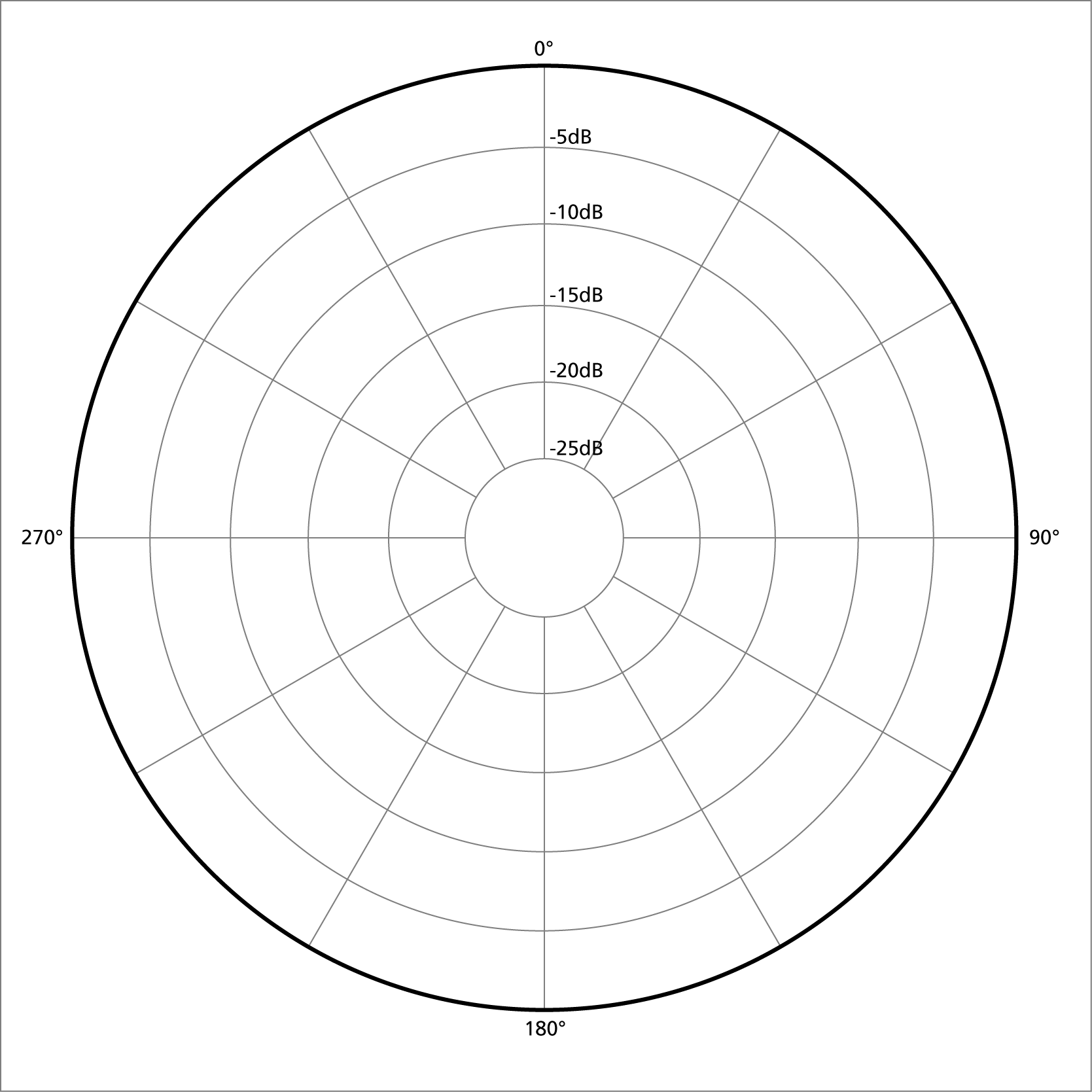
pick up patterns
cardioid


Hypercardioid


as we had in this lesson for the first time been taught how to use an rowland sound recorder, in this session we had got in to pairs and went out recording different sounds learning howto  use this tool. however the sounds recorded on this day i couldn't upload them onto the blog due to misplacing the file.

Monday, 24 March 2014

Artwork for sound brief

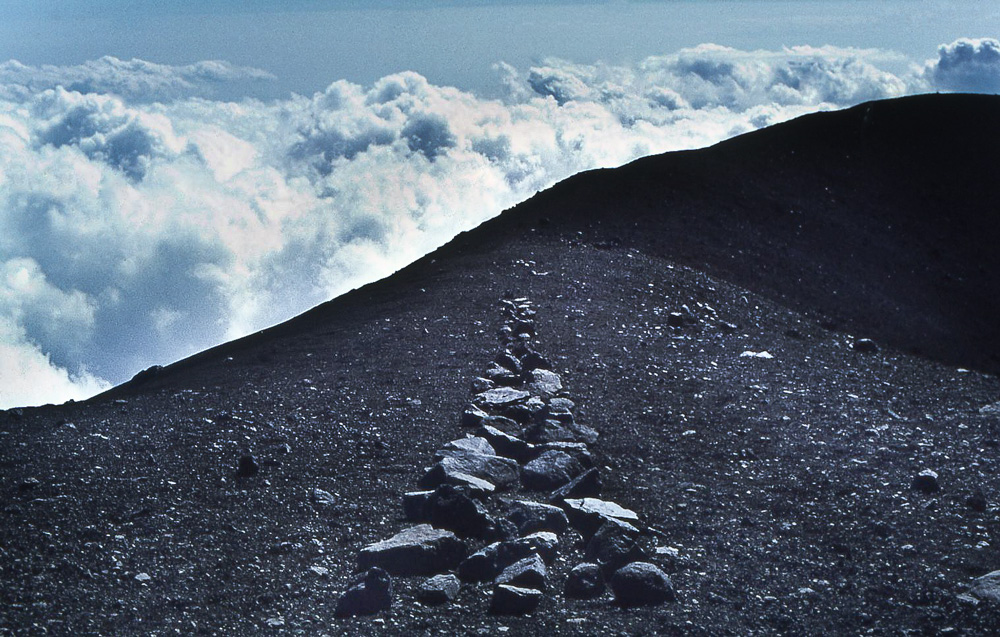
The image i've been given is by artist Richard Long named (A Line in Japan 1979)

to make a sound for this image i needed to research what the image is about and why Richard long considered doing this piece. 
summary of sculpture - A Line in Japan documents a temporary sculptural work made by Long on top of Mount Fuji in Japan. The work involved placing small rocks from the surrounding area into a straight line of roughly uniform width that stretches for several metres in length. However Long has explained that he had originally intended to create a different work, indicating how working directly in a landscape can be affected by conditions that are out of the artists control. These sculptures are subjected to constantly change natural and human conditions.

Longs own words 
The sculpture A Line in Japan (1979) came about because my original idea had been to make a map work recording a circular walk around Mt Fuji, following the snow line. However, as there was no snow on the mountain at all when I arrived, I had to follow a different idea. 

Richards Long has made similar sculptures as you can see below, which taking into consideration has a similar meaning to that of a line in japan, and how all of Richard Long work have the same message depicted within his sculptures, with natural and human conditions being out of the artists control.


Experimental Sound


Experimental Sound Project Brief

page1image1000
In this unit, we will examine the potential of sound design and its scope for making meaning through experimental technique whilst challenging the myth that audio merely serves the picture.

Humble sounds had always been considered the inevitable accompaniment of the visual stuck like an insubstantial, submissive shadow to the object that "caused" them.
- Walter Murch, 2000
Through examining a history of experimental sound design, we will explore the potential to build on imagery and manipulate the way visuals are interpreted.
Photographs of the original BBC Radiophonic Workshop

Task

Taking one of the artworks provided; interpret, record, edit and mix an experimental design consisting of only sound. The piece should last between 1 and 2 minutes in duration and implement experimental techniques of audio production as explored during this unit.
The sound design could consider an exploration of:
  • A Journey
  • A Narrative
  • Space and/or Place
  • A Passage of Time
The design should consider the possibility sound has to communicate ideas, distort realities and affect the interpretation of visuals. You should utilise skills acquired in the operation of recording equipment and Adobe Audition audio editing software to produce a complete experimental sound design. The final sound should be submitted as a Quicktime (.mov) file with a visual of the interpreted image. The audio on the file should adhere to the following standards:
   page1image14888
  • 48 kHz Sample Rate
  • 24 Bit Depth Resolution
  • Mixed to -10 dBfs
    PROJECT HAND-IN: 10AM, 21st MARCH 2014
DIGITAL FILM AND SCREEN ARTS: YEAR 1 FDFS4005: IMAGE FACTORY 13/14 EXPERIMENTAL SOUND UNIT